The 10-Minute Sit Spot: A Daily Nature Journaling Practice for Busy People
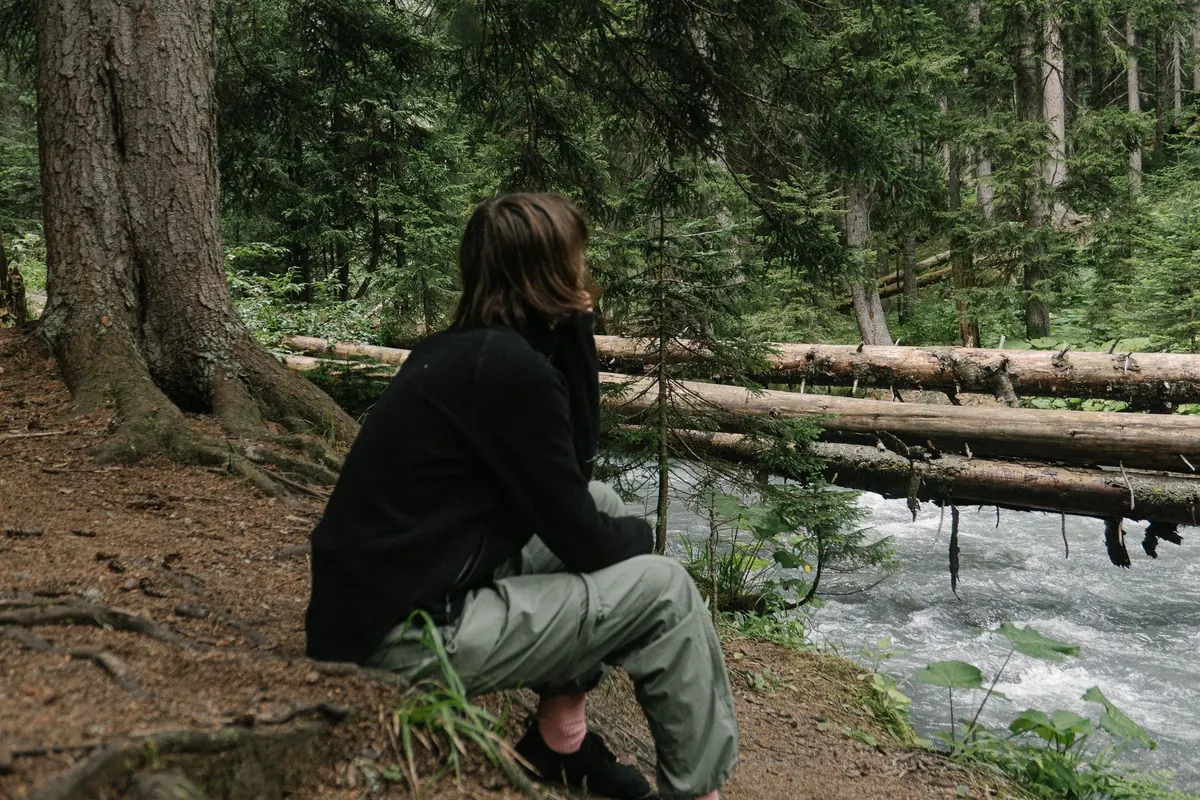
Ten minutes. A chair, a stump, a window ledge, a bench at the edge of a field. That is the whole equipment list.
The sit spot is an old practice among naturalists: one fixed place you visit often, sit in, and pay attention to. What stops most people is not the sitting. It is the assumption that it has to be a long, quiet hour in a wild place. It does not. Ten minutes, repeated most days, will teach you more about a season than a dozen weekend hikes through country you have never seen before.
What a Sit Spot Actually Is
A sit spot is one place, outdoors, close to where you already are, that you return to again and again. You sit in it. You watch. You write a few lines. That is all.
It is not a hike. It is not a birding trip with a list. It is not a walk with a camera. The point is the constraint: same place, same general time of day, week after week, so that anything different has a background to stand against. What you are building, slowly and without much effort, is a baseline — a sense of what normal looks like in that one patch of ground in that one week of the year.
Why Ten Minutes Works Better Than an Hour
An hour is an event. Ten minutes is a Tuesday.
The shorter the session, the more often it survives contact with a real schedule. Ten minutes fits before coffee, after school pickup, between two meetings, or at the end of the day when the light goes gold. A practice you can do on a bad day is a practice that lasts.
Ten minutes is also roughly how long it takes attention to settle. The first minutes pick up the obvious: traffic, wind, temperature, the sound of your own arrival. Only after that do the quieter things register, and the quieter things are usually the interesting ones. If you miss days, nothing is ruined. Five visits a week still builds a record.
Choosing a Spot You Will Actually Visit
Most failed sit spots are too far away or too ambitious. Use these as filters:
- Close. Five minutes from your door, or somewhere you already pass daily. The spot you can reach in slippers on a cold morning is the spot you will keep.
- Sittable. A bench, a low wall, a dry log, a step. Somewhere you can be still without feeling in the way.
- Slightly complicated. An edge between two kinds of ground, one tree, a hedge, a strip of water, a weedy corner. Complexity gives you something to watch.
- Allowed. Public land, your own yard, or a place where you have permission. Stay out of planted beds and private property.
- Unremarkable. Scenic is not required. The patch behind the parking lot will do nicely.
If two places are competing, choose the closer one every time.
The Ten-Minute Shape
Once you are sitting, a loose structure keeps the session from drifting into either a scroll through your phone or a full-blown survey.
- Minutes 0 to 1: record the frame. Date, time, sky, wind, temperature if you know it. Two lines at most.
- Minutes 1 to 3: sit still and scan. Move your eyes slowly from the ground near your feet to the horizon. Let your ears take over for a moment. Do not identify anything yet.
- Minutes 3 to 5: follow one thing. Whatever holds your attention — a squirrel's route, a single leaf, the way water moves under the bank. Watch until it stops being interesting.
- Minutes 5 to 8: write it down plainly. Facts beat adjectives. "Three chickadees in the cedar, one carrying something" is worth more than "birds everywhere."
- Minutes 8 to 10: note one difference. Something changed since your last visit, or something has not changed at all. "No difference" is a legitimate entry.
If You Have Five Extra Minutes
Draw a thumbnail sketch of whatever is in front of you, about two inches square. It does not need to be good; the looking it forces is the point. Or describe one sound in the words you would use to a friend on the phone.
March 14, 7:10 a.m. Clear, 41°F. Ground still frozen at the edges. Two-note whistle from the cedars, repeated. The puddle by the gate is liquid for the first time in weeks. Snowdrops out at the neighbour's wall — three blooms. No green anywhere else yet.
When Nothing Happens
Some mornings the spot is empty. No birds, no movement, nothing to report. This is normal, and it is still useful: the dull entries are what show you later what ordinary looked like.
Write down the plain facts. What is wet? What is moving, even slightly? What does the ground feel like underfoot? Which sound is dominant right now? What did the last twenty-four hours do to this place — rain, wind, frost, heat? Notice absences too. The wasps are gone. There is skin ice at the edge of the pond. The goldfinches have left the thistle. Absences are data.
Watching a Season Assemble Itself
The reason to keep the same spot is that entries start talking to each other. After three or four weeks you will read a line from a month ago and realise you have a date for something: the morning the maples leafed out, the last time you heard the tree frogs, the first afternoon the ground was dry enough to sit on.
Choose two or three recurring subjects and mention them every visit — one tree, one patch of ground, one sound. Same tree, every time, in the same few words. When it changes, you will not have to go looking for the change; you will trip over it.
Keep the comparing mechanical
Start every entry with the same three lines: date and weather, the tree, the ground. Skim back through the last month now and then. That is the entire review process. Your notes become a dated timeline of one small place, which is something no field guide can hand you.
Start Smaller Than You Think
Pick a spot today, or at least stand at the window and choose the one you would walk to. Tomorrow, sit for ten minutes with a timer and a pen. Write three lines. Stop when the timer goes off, even if you are in the middle of something good — leaving early is how you make sure you come back.
Missing a day changes nothing. Do not catch up, and do not apologise to the notebook. The practice is not the writing; the writing is just how you keep the practice. Within a fortnight you will walk past your spot and notice, without trying, that something has shifted.
Photo: Darina Belonogova / Pexels